
If you’ve ever gone countertop shopping and walked away more confused than when you started, quartz vs. quartzite is probably why. The names are so close that people mix them up constantly — even at some showrooms. But these are genuinely different materials with different price points, maintenance requirements, and looks. Getting them confused before you buy is an expensive mistake.
This guide breaks down both materials so you can make a confident choice for your home.
They Are Not the Same Thing
Let’s get the most important part out of the way first.
Quartz countertops are engineered. Manufacturers take crushed quartz particles — usually around 90 to 95 percent pure quartz — and bond them together with resins, pigments, and polymers. The result is a uniform, non-porous slab that comes in hundreds of consistent colors and patterns.
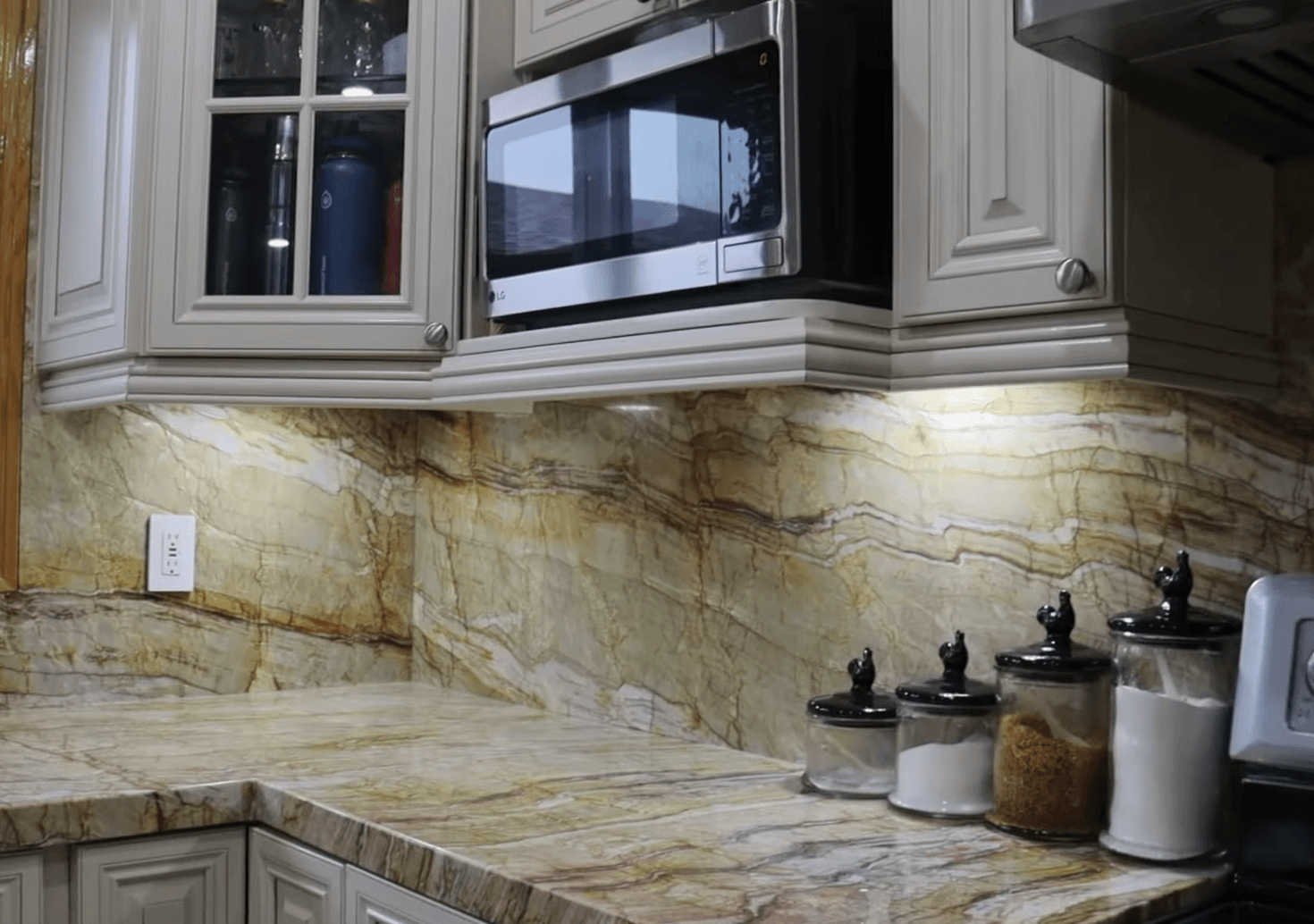
Quartzite countertops are natural stone. As the Natural Stone Institute explains, quartzite starts as sandstone and gets transformed by heat and pressure deep in the earth into a hard, crystalline rock. It’s quarried in large slabs similar to granite or marble, and each slab is one of a kind.
Same mineral. Completely different product.
How They Look
Quartz is designed to look consistent. Whether you’re ordering six slabs or one, they’ll match. This predictability is a real advantage for large kitchens, islands, or any project where continuity matters.
Quartzite looks like natural stone — because it is. Most quartzite is white or light gray with flowing veining, and many people buy it specifically because it mimics high-end marble without marble’s notorious softness. No two slabs are identical, which homeowners either love or find stressful when matching across seams.
If you want the marble look with better durability than actual marble, quartzite is the honest answer. If you want total color control and consistency, quartz wins.
Durability: Which One Holds Up Better?
Quartz is tough and predictable. The resin binders make it non-porous, meaning bacteria, wine, and coffee can’t soak in. It resists chips well under normal daily use. The one weakness is heat — the resin can discolor or crack under sudden high temperatures, so trivets are non-negotiable. Quartz also doesn’t love prolonged direct sunlight; UV exposure can cause some colors to fade or yellow over years.
Quartzite is one of the hardest natural stones available — harder than granite in many cases. It handles heat better than quartz because there’s no resin to damage. However, quartzite is porous. It needs sealing at installation and resealing every one to two years to resist staining. An unsealed quartzite countertop will absorb oil and wine. Some softer quartzite varieties — often mislabeled at showrooms — can etch from acidic foods and cleaners.
Bottom line on durability: For low-maintenance, set-it-and-forget-it performance, choose quartz. For heat resistance and the look of natural stone, quartzite delivers — with proper sealing.
Maintenance Requirements
Quartz maintenance is simple: wipe with mild soap and water. No sealing, ever. Avoid harsh abrasives and prolonged sun exposure. That’s the whole list.
Quartzite needs more attention. Sealing is required — skip it and you’ll have staining within months of regular cooking. Use a pH-neutral cleaner rather than anything acidic, which can dull the finish over time. If your quartzite is softer (dolomitic quartzite gets sold as quartzite but behaves more like marble), etching from lemon juice or vinegar is a real risk.
If your household is busy, you have kids, or you just don’t want to think about your countertops — quartz is the easier choice. If you’re willing to do the maintenance in exchange for natural stone character, quartzite rewards that effort.
Cost Comparison
Quartz and quartzite are generally in a similar price range, but there’s nuance.
Quartz typically runs $70 to $120 per square foot installed for mid-range brands. Premium designer quartz — Calacatta looks, specialty formats — can push to $150 or higher. For a full breakdown of what quartz costs on its own, see our guide to the average cost of quartz countertops.
Quartzite usually starts around $80 per square foot installed and can reach $200 or more for rare varieties with dramatic veining. Because it’s a natural stone that requires expert handling and more precise templating, installation costs can run slightly higher than comparable quartz projects.
Where quartzite can save you money: if you want the marble look, true marble is high-maintenance and soft. Quartzite gives you similar aesthetics at better durability — and often a lower price than marble.
The Quartzite Labeling Problem
This deserves its own section because it catches a lot of buyers off guard.
Some materials sold as “quartzite” in showrooms are actually dolomite marble or soft quartzite — stones that look similar but behave very differently. These softer materials will etch, scratch, and absorb liquids far more than true quartzite.
Before you buy quartzite, ask for the hardness rating and request a lemon juice or acid test on a sample. True quartzite won’t etch. If the stone etches from a drop of lemon juice, it’s not what it’s being sold as. A reputable fabricator will be transparent about this and will help you identify genuine quartzite versus materials that are being mislabeled.
Which One Is Better for Kitchens?
For most kitchens — especially working kitchens with multiple cooks, kids, and daily heavy use — quartz is the more practical choice. It’s non-porous, requires no sealing, handles daily spills without drama, and comes in styles that mimic the marble or stone look you might be drawn to with quartzite. Our quartz countertop installation service covers kitchens of every size and layout across the DFW area.
Quartzite makes a compelling kitchen choice if you prioritize natural stone, want the heat resistance that quartz can’t match, and are willing to commit to the sealing schedule. In high-end kitchen renovations where design is the priority, quartzite often wins on aesthetics alone.
Which One Is Better for Bathrooms?
Quartzite is a genuinely strong choice for bathroom vanities. Bathrooms see less cooking-related acid exposure than kitchens, and the sealing routine is less burdensome when the surface isn’t getting hit daily with citrus, wine, and hot pans.
Quartz is still the lower-maintenance option here too — and for bathroom countertops where moisture resistance matters, quartz’s non-porous surface is an advantage.
Both materials work well in bathrooms. Your choice here comes down to budget, aesthetics, and whether you want to deal with periodic sealing.
Quick Comparison
| Quartz | Quartzite | |
|---|---|---|
| Material type | Engineered stone | Natural stone |
| Porosity | Non-porous | Porous — needs sealing |
| Heat resistance | Low — use trivets | High |
| Scratch resistance | Very good | Excellent |
| Maintenance | Soap and water only | Seal every 1–2 years |
| Consistency | Uniform across slabs | Each slab is unique |
| Price range (installed) | $70–$150+ | $80–$200+ |
| Best for | Busy kitchens, low maintenance | Natural stone look, heat-heavy use |
The Bottom Line
If you want durability, zero maintenance, and consistent looks — quartz is the straightforward choice. It performs predictably, doesn’t require sealing, and handles the realities of daily kitchen life without drama.
If you want natural stone character, better heat resistance, and are willing to commit to proper care — quartzite is a genuinely excellent material when properly sourced and sealed.
Either way, the fabrication and installation quality matters as much as the material you pick. A precise template, clean cuts, and tight seams will do more for how your countertops look and last than the material decision alone.
Considering quartz for your Flower Mound, Highland Village, or Southlake kitchen? Get a free countertop quote and we’ll help you pick the right material, color, and edge profile for your space.