
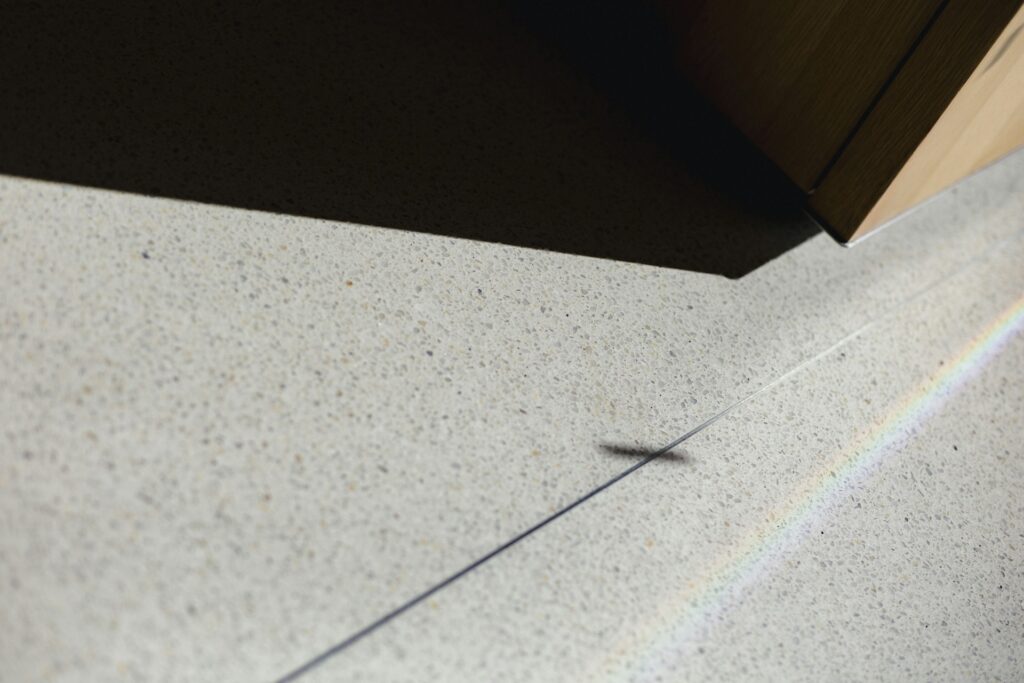
Yes, most quartz countertops have seams, and that is normal. Quartz slabs come in set sizes, so larger kitchens, islands, and counters with turns usually need two or more pieces joined together. A good seam should be tight, level, and placed where it looks natural. A bad seam looks wide, rough, or uneven. The goal is not zero seams. The goal is well-planned seams done with care.
Why Quartz Countertops Need Seams
Each quartz slab has a maximum length and width. If your Southlake kitchen is larger than one slab can cover, your installer must join pieces. Seams also show up around corners, near sinks, and in unusual layouts where one slab cannot wrap the space.
A seam does not mean poor workmanship. It is a normal part of fabricating and installing many countertops, especially on big islands and L-shaped runs.
What a Good Seam Looks Like
A quality seam blends in instead of standing out. A well-done seam should:
- Be narrow and filled cleanly
- Feel mostly smooth to the touch
- Match the counter color and pattern closely
- Sit flat, with both pieces level
- Be placed in a planned, low-traffic spot
- Stay tight and secure over time
Seams are easier to see on solid colors and bold veining. Busy, speckled patterns tend to hide them better, which is worth keeping in mind when you pick a slab.
What Is Not Normal
Call your installer if a seam is wide, rough, higher on one side, cracking, separating, or filled with messy adhesive. These point to layout or workmanship problems, not just normal seam appearance.
The Natural Stone Institute publishes industry installation standards for seam placement, joint widths, and tolerances, because careful measuring and skilled work are needed for clean seams.
Why Seam Planning Happens Early

Seam quality starts before the slab is ever cut. A good fabricator plans seam locations based on slab size, cabinet layout, sink placement, and how the pattern moves across the counter. They also plan for solid support under the seam.
In Southlake kitchens with large islands, smart seam placement can keep the most visible surfaces looking continuous while hiding joints in less noticeable spots. A good shop will tell you what is realistic before installation day.
How to Reduce Seam Problems
You can help the process go smoothly. Make sure your cabinets are level before the countertops arrive, since an uneven base makes seams harder to set flat. Ask who is responsible for support around dishwashers, large overhangs, and wide openings.
Clear communication up front leads to fewer surprises and a stronger final result.
Final Answer
Quartz countertops should have seams when the layout calls for them, and that is completely normal. What matters is that each seam is tight, smooth, level, and planned. Wide, rough, or uneven seams are the real warning sign.
If you want your counters measured and joined with care, DFW Quartz Countertops can handle expert quartz countertop installation for your Southlake home.