

Quartz countertops offer meaningful eco-friendly benefits through abundant raw materials, efficient modern fabrication, and exceptional longevity. The base mineral is one of the most plentiful on Earth, and engineered quartz slabs are built to last for decades with very little maintenance. That long service life is where most of the environmental win comes from. A countertop you do not replace is a countertop that does not become waste.
When you choose quartz, you are selecting a surface that combines a naturally abundant mineral with modern manufacturing into something durable enough to outlive trends. That balance is what makes quartz a sensible long-term choice for homeowners who care about both style and sustainability.
How Does Quartz’s Natural Composition Benefit the Environment?
Quartz is formed from silicon and oxygen, the two most abundant elements in the Earth’s crust, which makes the raw material behind engineered quartz countertops one of the most plentiful on the planet. Modern engineered quartz slabs combine roughly 90% ground natural quartz with a small share of polymer resins and pigments. The high natural mineral content keeps the surface hard, dense, and non-porous, while reputable manufacturers publish material safety information and meet recognized indoor air quality standards. Choosing a quartz brand that publishes its emissions data is the cleanest way to keep your indoor environment in mind.
What Makes Quartz Processing More Efficient Than Many Alternatives?
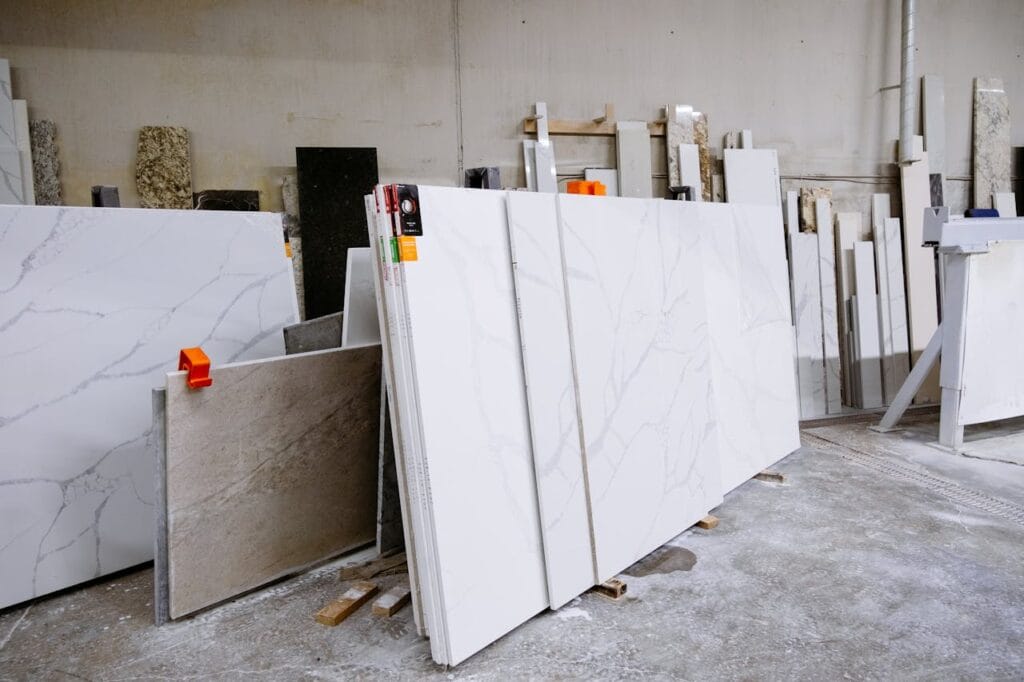
Once the slab is formed, the path from warehouse to your kitchen is short. Fabrication is mostly cutting, polishing, and finishing, all guided by digital templates and CNC equipment that minimize waste. Modern fabrication shops continue to refine these steps, cutting down on offcuts and rework while keeping quality high. To see how that process plays out on a real job, read what happens during quartz countertop fabrication in Highland Village.
How Does Quartz’s Longevity Reduce Environmental Impact?
The biggest environmental win for quartz is how long it lasts. Properly maintained engineered quartz countertops can stay in service for decades, which means fewer slabs manufactured, shipped, and landfilled across the life of a home. For a closer look at lifespan in real Texas homes, see how long quartz countertops last in Bridlewood.
What Waste Reduction Benefits Does Quartz Provide?
Modern digital templating and CNC cutting reduce the amount of slab that ends up as scrap. Offcuts are commonly reused for smaller pieces such as vanity tops, hearths, and shelves, keeping more material in service instead of in a landfill. Choosing a fabricator who plans seams carefully and reuses offcuts is one of the simplest ways to keep waste low on your project.
How Does Quartz Support Sustainable Home Design Goals?
Durable, low-maintenance surfaces fit cleanly into a sustainable home plan because they reduce ongoing replacement and intensive cleaning. Quartz wipes clean with mild soap and water, which means fewer specialty cleaners and less packaging over time. For homeowners across Flower Mound, Highland Village, and the wider DFW Metroplex, that is a practical, everyday way that quartz supports a lower-impact household.
Quartz countertops deliver real eco-friendly benefits through abundant raw material, efficient fabrication, exceptional longevity, and reduced waste during install. For homeowners who want a surface that looks beautiful and stays in service for decades, quartz is a sensible long-term choice.
Want quartz that is sized, fabricated, and installed to last? Talk to DFW Quartz Countertops about expert quartz countertop installation.